Monday, 3 October 2011
Saturday, 10 September 2011
Monday, 8 August 2011
In the cabin
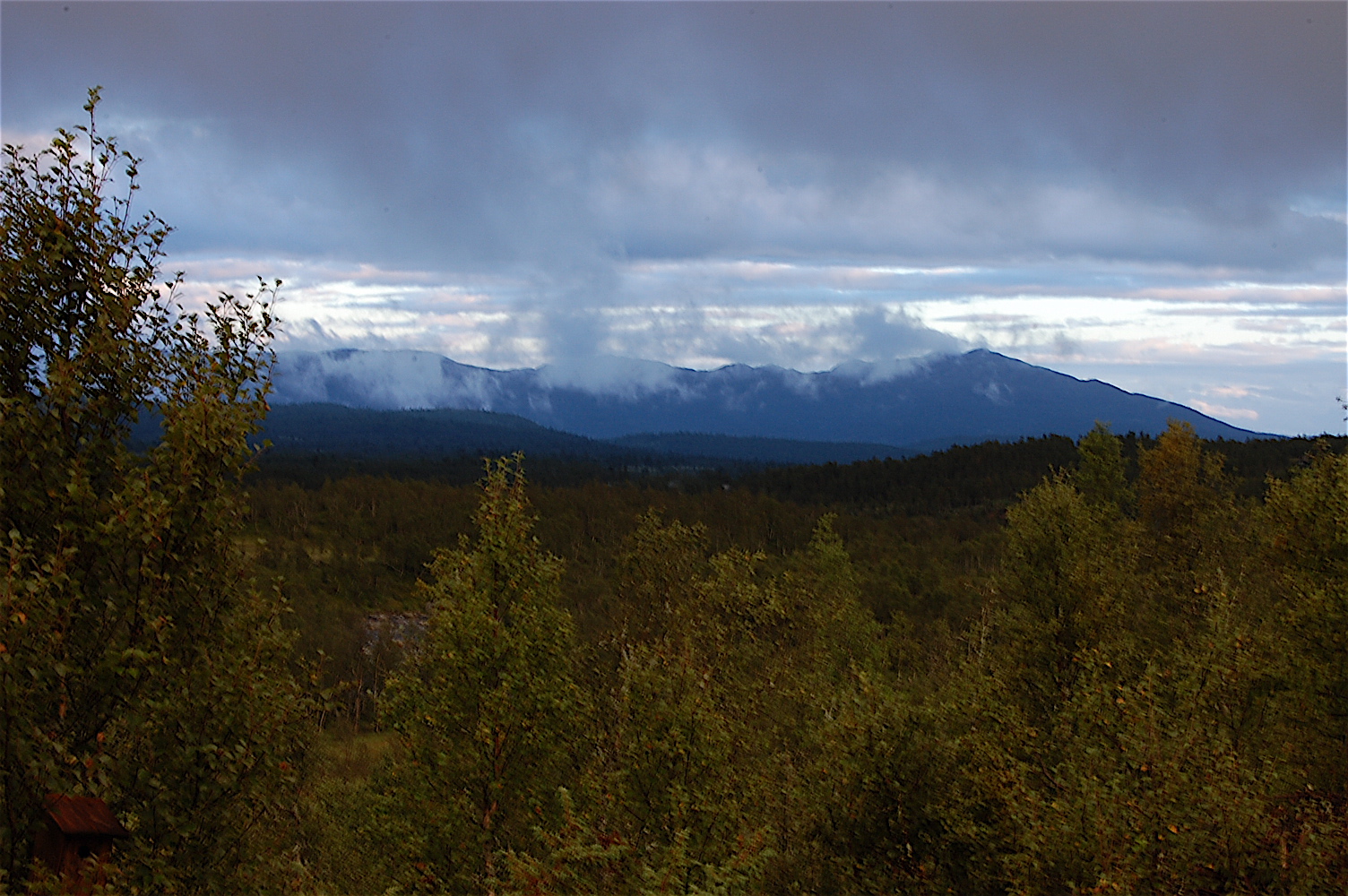
A weekend in Rauland, in the cabin, no kids. Did some walking, eating, relaxing and reading. Some rain, but nice to stay inside too.
Friday, 8 July 2011
The romantic forest (Per Kirkeby and Efterklang, Denmark)
Stills from the 1970 film Den romantiske skoven - Dyrehaven by Per Kirkeby and Jørgen Leth. The Danish band Efterklang uses material from this film for their video Modern Drift. It's in color and very beautiful, the song is very nice too.
Tuesday, 5 July 2011
Wednesday, 15 June 2011
Wood, textile and light
Monday, 6 June 2011
Tuesday, 31 May 2011
The Ash Dome, David Nash
"...But one of Nash’s most impressive and widely hailed works can never be moved anywhere. Further down the Vale of Ffestiniog, where he stayed with his grandfather as a child, are four acres of prime Welsh woodland surrounded by grand, dome-like hills. Having inherited this terrain, Nash decided to plant 22 ash trees there in the late-1970s. He chose ash because it is a very resilient tree, forever contorting itself in order to seek the light. And over the decades, with the help of careful pruning, and splashing of faux fox’s urine to keep the bark-stripping squirrels away, Nash has made Ash Dome grow into an impressive natural sculpture that echoes the forms of the encircling hills.
Nash loves working with wood. ‘There’s a profound wisdom there, stretching over millennia,’ he tells me. ‘I take my cue from what the material suggests to me. And this exhibition will reveal 40 years of my research. I am a researcher into the science and anthropology of trees and the wood they produce. For every culture and civilisation, wood is a fundamental survival material for building, defending, cooking and so much more. I’m also a maker of objects that are motivated by an idea, an attitude of a healthy relationship with our outer skin, the environment." (excerpt from interview found here)
see film here
Saturday, 14 May 2011
Sunday, 8 May 2011
Japanese woodblock session 2
They may look like kitchen towels, but they are woodblock prints. I took the pictures in the afternoon light, it comes through the window of my work space. I liked the way it made the prints look light and floating.
One of the nice things about Japanese wood-block printing (moku-hanga) is that you can do it at home, and you don't need a huge printing press. You use a tool called "baren" (a disc covered with bamboo leaves) to impress the ink/colour into the paper. There are numerous steps to make before you start printing, though... cutting the block, preparing the paper, making the nori (a binder consisting of rice paste and water) ... But it's all very low tech, non-toxic and the technique has not changed much since it was introduced to Japan by Bhuddist missionaries in the 8th century. I like it.
Tuesday, 3 May 2011
Japanese woodblock session
Today I have done some printing again. Can you see the faint blue colour, fading gradually? It's typical of Japanese prints. Gradation, or bokashi. I'm not a huge fan of it, but it's something that has to be tried. So I tried it today, and it actually worked pretty well. Instead of making multiple prints of the same motif, I use different blocks and make unique prints. It's more fun, and allows for experimentation.
The papers are all wrinkled, they have to be pressed flat inside some heavy book... A little bit like blocking knitted garments.
Subscribe to:
Posts (Atom)